Professional odour treatment

Match the controlled process
to the odour problem.

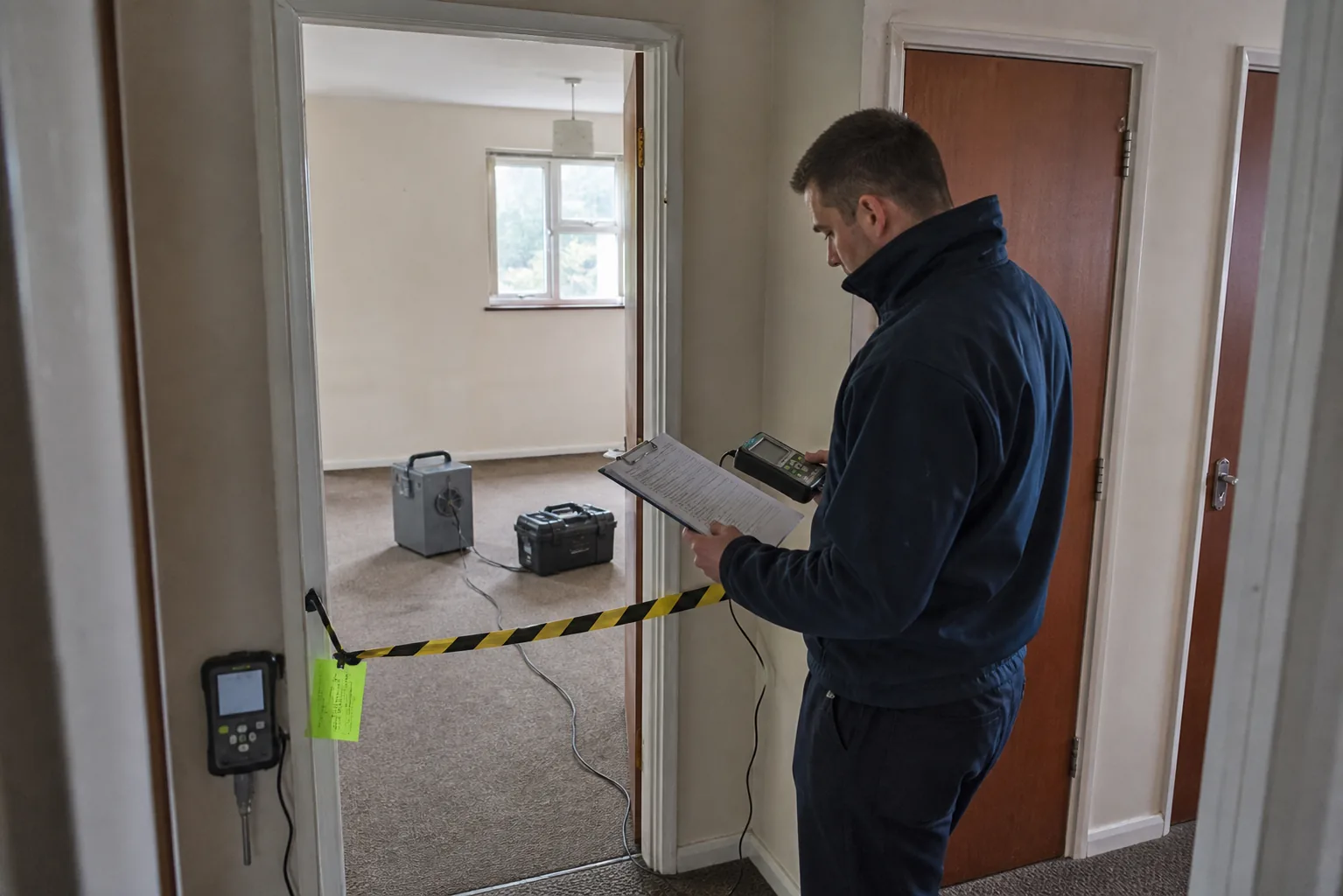
Start with the source, environment and exposure risks. Then define preparation, equipment, isolation, ventilation, monitoring and clearance.

Restoration professional checking monitoring equipment outside an isolated unoccupied treatment room
01

Professional application

Commercial kitchens

Controlled dosing into a correctly designed extract system with suitable pre-filtration, reaction time, interlocks and commissioning.

Plan a kitchen system
  • Airflow and cooking duty
  • Filtration and contact time
  • Planning and maintenance context
02

Professional application

Fire and smoke remediation

Ozone can form one controlled stage after source removal, assessment and specialist cleaning. It does not replace the remediation process.

Discuss a remediation duty
  • Source removal first
  • Unoccupied, isolated treatment
  • Ventilation and verified clearance
03

Professional application

Severe property odours

For vacancy, contamination and sensitive cases such as decomposition, high-dose treatment must be planned and controlled by competent professionals.

Get an equipment recommendation
  • Site-specific risk assessment
  • Controlled treatment boundary
  • Monitoring before re-entry
04

Professional application

Professional vehicle treatment

Equipment and hire routes for trained valeters, dealers, fleets and specialist cleaners with controlled access and ventilation procedures.

Discuss professional hire
  • Professional users only
  • No occupancy during treatment
  • Documented ventilation process

Evidence-based language

Hygiene claims need
specific evidence.

We do not make medical, sterilisation or organism-kill claims without evidence for the exact product, dose, exposure time, environment and validated process.

Read the safety centre